
The Aging Grid and South Louisiana: What Homeowners Should Know About Power Outages
Boudreaux’s Electrical | Blog post for October 19, 2026 | Aging Grid series
From Lake Charles to New Orleans, and from Lafayette and Acadiana to Houma, Thibodaux, and the River Parishes, people in south Louisiana share a familiar experience. The lights flicker, the air conditioner shuts off, and you wait to find out whether it will be a few minutes or a few days. Behind those outages is a bigger story about the electric grid itself, and it’s worth understanding if you want to protect your family.
What “Aging Grid” Really Means
The power that reaches your home travels through a long chain of equipment: power plants, high-voltage transmission lines, substations, transformers, and the poles and wires on your street. Much of it was built decades ago. According to the U.S. Department of Energy, more than 70 percent of the nation’s transmission lines and power transformers are over 25 years old. Older equipment isn’t automatically failing, but it is more prone to breakdowns, especially when heat, wind, flooding, or heavy demand push it hard. The Department of Energy also points out that this aging infrastructure is vulnerable to extreme weather like hurricanes.
South Louisiana Feels It More
Our region has an extra challenge, because we get the kind of weather that puts the most stress on the system. The U.S. Energy Information Administration reported that Louisiana customers averaged about 60 hours without power in 2020, the year of Hurricane Laura, and more than 80 hours in 2021, the year of Hurricane Ida. Both were among the highest totals in the country. Ida alone left about 1.2 million Louisiana customers without power, some for more than two weeks. And in February 2021, Winter Storm Uri knocked out power to nearly half a million Louisiana customers, a reminder that hurricane season isn’t the only time to be ready. And, let’s not forget about Hurricane Isaias which made landfall on October 9, 2026 impacting our friends and families in the Destin, FL area and beyond. It ramped up quickly leaving very little time for storm preparations.
There’s an important detail in the national numbers, too. When major storms and other big events are set aside, the average American customer loses power for roughly two hours a year, and that figure has stayed fairly steady since 2013. The long outages come from the big events. In south Louisiana, those events are part of life, and equipment that has been in service for decades is being asked to handle them.
It Isn’t Just About the Storm
Some outages have nothing to do with hurricanes. A limb comes down on a line. A transformer fails on a humid August afternoon when every air conditioner in the neighborhood is running. A cold snap drives up heating demand. For families with medical equipment, a home office, or a sump pump, an outage doesn’t have to last long to cause a real problem.
One Region, One Community
We’re a family-owned business based in the Baton Rouge area, and like most families here, we know south Louisiana doesn’t stop at a parish line. When a storm comes ashore near Houma or Lake Charles, the whole region feels it. Neal and Malissa have been serving the community for more than 40 years, and we’ve seen that the households that fare best are the ones that planned ahead.
What You Can Do About It
You can’t rebuild the grid, but you can decide how dependent your household is on it. Here’s where to start:
- List your essentials. Refrigerator, freezer, cooling and heating, sump pump, medical devices, lights, and internet. This tells you how much backup power you actually need.
- Look at your panel. Your electrical panel is the heart of your home’s power system. If it’s old or crowded, it can limit what you can safely add, including a generator.
- Ask about surge protection. Protecting appliances and electronics from the spikes that come with grid trouble is one of the more affordable steps you can take.
- Consider standby power. A permanently installed standby generator starts automatically when utility power drops, and a transfer switch keeps it safely separated from the utility lines.
- Plan your fuel. Standby units run on natural gas or propane, so know which fits your home and how long your supply will last.
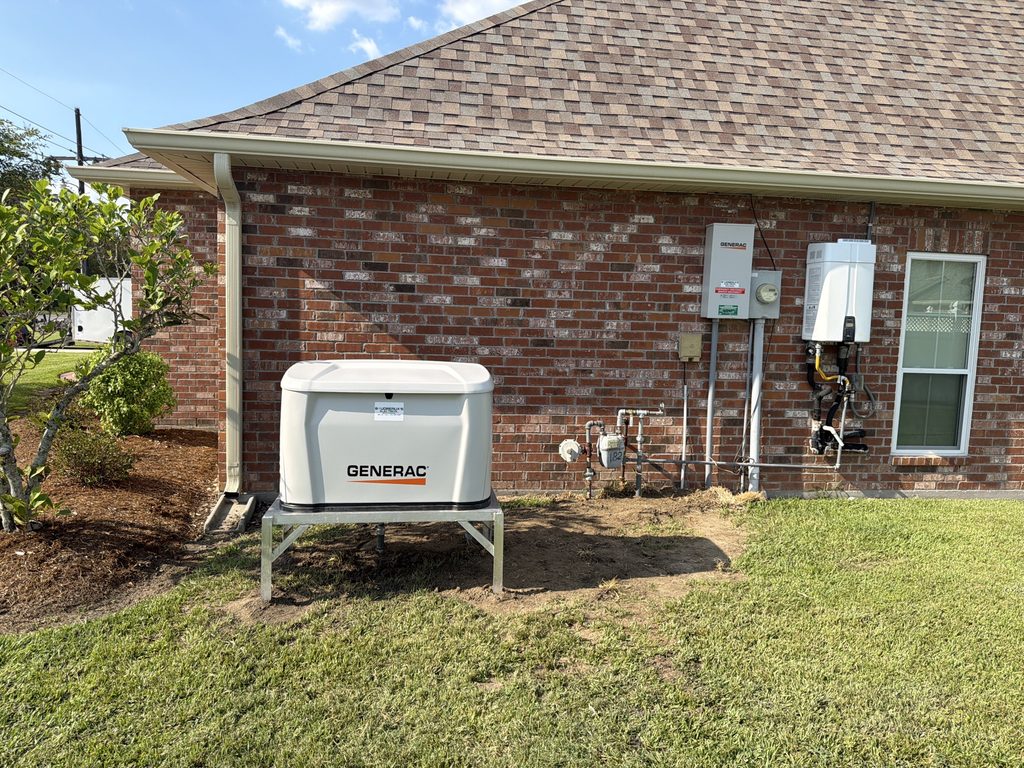
Generac transfer switch and disconnect
Why It Helps to Work With a Family Business
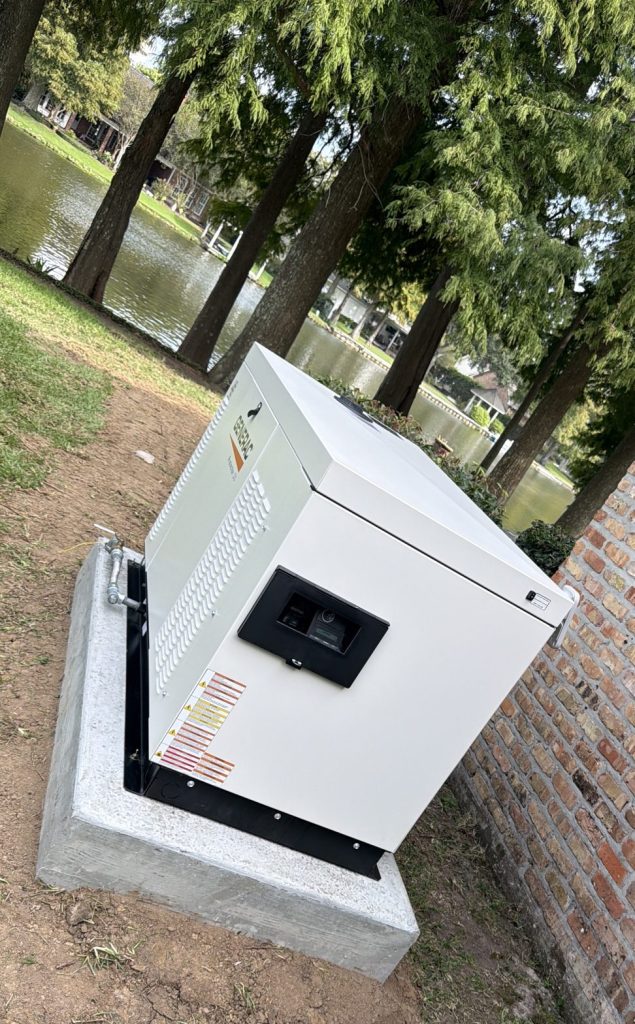
Our work centers on electrical panel upgrades and Generac generator installation, and we treat them as one project, because a generator is only as dependable as the electrical system behind it. As a family-owned company, we put our name on every job and count on our neighbors’ trust for the long haul. That means we’ll look at your home, listen to how your family lives, and recommend what fits, not just what’s biggest.
Get Ahead of the Next Outage
The grid won’t be rebuilt overnight, and storm season will come around again. But your home can be ready. If you’re in the Baton Rouge area or elsewhere in south Louisiana, reach out to Boudreaux’s Electrical to schedule a site assessment. Call (985) 397-1562 or (225) 300-9389 or visit boudreauxselectrical.com, and we’ll walk through your options together.
Check Us Out and Stay Connected
Ready for a free quote or generator maintenance? Use our online request form. You can also look us up on the Louisiana State Licensing Board for Contractors website, follow us on Facebook, and if we have worked with your family, leave us a Google review (review page 1 | review page 2).
Sources: U.S. Department of Energy, Grid Deployment Office; U.S. Energy Information Administration, “Today in Energy” reports on electricity reliability in 2020, 2021, and 2022.